 |
 | ||
Tae kwon do historyTae kwon do history is rich and varied, from Hwarang to modern warriors.
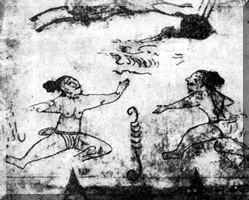
Tae kwon do history is rooted in ancient strugglesLike many areas of the world, Korea was influenced by its neighbors. In the earliest of times, Chinese nomadic tribes formed outposts along the northern-most areas of the current Korean peninsula. These nomads experienced continual conflict with northern tribes as they attempted to create their own unique civilization. This warring caused these tribes to eventually form their own governing hierarchies. The outcome was the formation of three powerful kingdoms: the Koguryo (37BC) in the northern region, the Paekche (18BC) on the southwestern area of the peninsula and Silla (57BC), located on the southeastern plains of the peninsula. This era is referred to as the Three Kingdoms Period dating from 18BC-AD668. It was during the Three Kingdoms Period that native martial arts, one of which was called Taek Kyon, are believed to have begun on the Korean peninsula, specifically in the Koguryo kingdom. The leading evidence of this is a mural painting on the ceiling of the Muyong-Chong tomb, which dates from AD3-AD427 (See image above). The mural seems to depict two warriors engaged in open hand fighting. Open hand fighting, or fighting without weapons, is the base idea behind the formation of all martial arts and is one root in the history of tae kwon do.
Martial arts and tae kwon do history evolve.It seems that martial arts developed in many areas of Asia concurrently. The influence, related cultures had on one another is evident. The proximity of the Koguryo kingdom to China on its northern border and to Japan via the Paekche kingdom in the south allowed for the Chinese, Korean and Japanese cultures to share, grow and reinterpret their respective influence. Each nation took what fit their own unique views from architecture, art, literature, and religion and assimilated it into their own changing cultures. This is certainly true in tae kwon do history.
Hwarang changes Korea and tae kwon do historyKorean martial arts spread with the advent of a young warrior class called the Hwa Rang. The Hwa Rang were an elite group of young men within the Silla kingdom who were well schooled in academics and art of their time. They held to a high standard of moral conduct. Modern times did not stop clashes among neighbors. Korea experienced frequent conflicts with China and Japan and found herself literally in the middle of conflicts between the two nations. These clashes also brought the native martial arts of Japan and China into Korea, further developing the martial arts practiced among Korean families. The practice of handing down martial arts knowledge from generation to generation would prove crucial to its survival.  Kwans History Kwans History
|
If you like Taekwondo-Network please consider making a Donation. Your help will let TKDN grow to become the Premier tae kwon do site on the web. Kam sa ham ni dah!
FREE Tae kwon do ClipartGet martial arts clipart like the one below! 50 + images available for your use. Click the Clipart button and follow instructions to get the password. Your email address will be added to our TkdTimes eZine mailing list. Pride in your Country Tae Kwon Do T Shirts  USA TaeKwonDo  UK TaeKwonDo  Canada TaeKwonDo  Netherlands TaeKwonDo Check out |
||
Find a topic...
Custom Search


|
|||
|
Homepage | Blog | Site News | Store | Privacy Policy | Sitemap
Belts | Classes | Clipart | Forms | History | Injury Prevention | Kids | Martial Arts |Master | Meditation | Men Olympic | Philosophy | Self Denfense | Styles | Tea | Techniques | Terminology | Tournaments | Women | Vegetarian
Copyright©
2008-2016 The Taekwondo Network. Always check with a physician before beginning any exercise regimen. |
|||